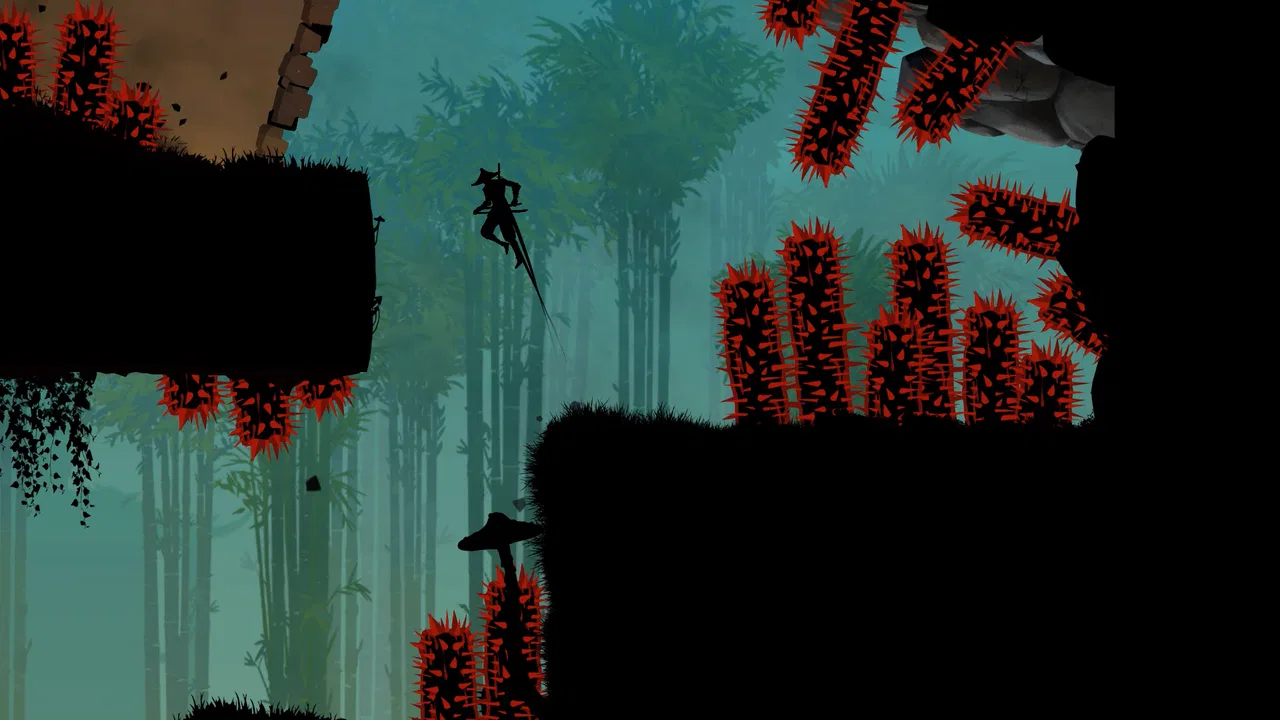
Ninja Arashi 2
- 4.5
- Rating
- 50.00M
- Installs
- Free
- Price

 Analysis by App-foxy
Some mobile adventures feel like a long checklist, while Ninja Arashi 2 feels more like a sequence of small tests that ask for your attention. I guide Arashi through dangerous spaces, react to hazards, and try to turn a failed attempt into a cleaner run. That simple pattern is the reason I kept returning to it: the game gives me something immediate to do, shows me quickly whether my decision worked, and makes another attempt feel worthwhile rather than pointless.
This is a free adventure game from Black Panther, aimed at Teen players and available for devices running Android 8.0 or later. It has attracted a large audience, with more than ten million installs and an average score of 4.6 from roughly 386 thousand ratings. Those figures suggest broad appeal, but they do not remove the need to understand its style. This is not the right choice if you want a relaxed storybook adventure or a fully open world. It is better suited to players who enjoy compact action challenges, repeated attempts, and the satisfaction of improving through observation.
How the first action sets the tone
The opening minutes establish the main relationship between movement and danger. I am not simply walking through scenery to reach the next story scene. Every step can become a decision about timing, position, or whether it is safer to wait before moving again. Arashi’s ninja identity gives the controls a clear purpose: I am trying to move with intention, not just push forward and hope the character survives.
You May Also Like

 AccuWeather: Weather Radar
AccuWeather Review: A Quick, Clear Forecast for Everyday Decisions
For everyday plans, the best forecast is the one you can understand quickly. AccuWeather makes rain timing, radar, and local conditions easy to act on, with a few trade-offs.

 Hill Climb Racing
Why Hill Climb Racing Still Turns Crashes Into One More Run
A tiny car, a bumpy hill and one more upgrade: Hill Climb Racing keeps resurfacing because its simple chaos makes every near-miss feel personal.

 AliExpress - Shopping App
AliExpress Makes Global Shopping Feel Personal, but Shoppers Bear the Risk
AliExpress turns a global marketplace into a pocket-sized discovery engine. Its reach is useful, its shopping loop compelling, and its trade-offs easy to miss.

 Lords Mobile: Kingdom Wars
Lords Mobile Is a Kingdom-Building Routine, Not a Quick Match
A case-by-case verdict on the building, battles, device demands, and social commitments that make Lords Mobile rewarding for some players and exhausting for others.

 PDF Scanner app - TapScanner
TapScanner Makes Paperwork Easier to Capture, Check, and Share
TapScanner makes scanning with a phone feel less like a rescue operation and more like a dependable step in getting work done. Its capture tools are useful, though not flawless.

 Block Blast!
 Shows How Much a Puzzle Game Can Leave Out
A quiet grid game shows why puzzle players increasingly value instant clarity, repeatable skill and low-pressure play—and where the genre still needs to catch up.
More From Our News Desk
View All News


That distinction matters on a phone. A mobile game needs to make its basic action understandable quickly, and this one does that through direct cause and effect. I press, move, react, and immediately see the result. When I misjudge a hazard, the mistake feels connected to my input instead of hidden behind a complicated system. When I pass a difficult section, I usually know what changed: I noticed the pattern, adjusted my timing, or stopped rushing.
The adventure framing also gives the movement a reason beyond collecting points. Arashi is trying to rescue his son, so the journey has a personal goal that keeps the stages from feeling completely abstract. I would not describe the story as the main attraction, but it gives the action a useful emotional direction. Each area feels like part of a rescue attempt rather than an unrelated set of platforming exercises.
One of the most useful habits is to treat the first pass through a section as reconnaissance. I do not expect to complete every unfamiliar stretch immediately. Instead, I look for what the level is teaching me: where danger appears, which route seems safer, and whether the game is testing speed or patience. This approach reduces frustration because a failed run can still provide information for the next one.
That is also where the game separates itself from casual alternatives that allow constant improvisation. In many lightweight mobile adventures, I can make a mistake and recover without changing my approach. Here, repeating the same action usually produces the same result. The better response is not to tap faster but to understand why the previous attempt failed.
Movement works best when I stop rushing
The most satisfying moments arrive when I slow down just enough to read the situation. A quick player may initially assume that a ninja game rewards constant forward motion, but the useful skill is controlled momentum. I often get farther by pausing to assess a threat than by trying to force my way through it. That creates a pleasant tension between the urge to advance and the need to preserve the attempt.
This makes the game a good fit for short breaks, although “short” does not always mean effortless. I can begin a session while waiting for an appointment and get immediate action, but a difficult section may keep my attention longer than expected. The game is easy to start and harder to put down once I am close to solving a sequence.
Players who prefer story-heavy adventures should know what they are choosing. The narrative goal gives context, but the hands-on challenge carries most of the experience. If your ideal adventure is built around dialogue, exploration without pressure, or discovering a large world at your own pace, this may feel too focused on execution.
The feedback rhythm: action, reaction, adjustment
The core loop becomes clear after a few attempts. I take an action, receive immediate feedback, decide what that feedback means, and try again with a small adjustment. This rhythm is more important than any individual obstacle because it determines whether failure feels educational or merely irritating. In my experience, the game usually lands on the educational side when I am paying attention.
Good feedback in a platforming adventure is not only about visual effects. It is about clarity. I need to understand whether I mistimed a move, approached from the wrong angle, or ignored a warning. Ninja Arashi 2 encourages that kind of reading because the next attempt is often available before the frustration has time to become overwhelming. The reset turns a mistake into a question: what will happen if I change this one part?
I found it helpful to change only one variable at a time. If I alter my speed, route, and timing together, I may succeed without knowing why. If I keep two choices consistent and adjust one, the level becomes easier to learn. This is a small technique, but it makes a real difference in sections that initially seem unpredictable.
Another practical tip is to separate observation attempts from completion attempts. On the first try, I watch the sequence and accept that I may not finish. On the next, I focus on reproducing the successful parts while correcting the specific mistake. That workflow is especially useful for players who normally dislike repeating levels, because it gives each restart a clear purpose.
The feedback rhythm can also expose the game’s limitations. Repetition is rewarding only when the player believes improvement is possible. If I make the same error several times, the experience becomes tense rather than fun. The game expects patience and attention, and people who want forgiving controls or a more relaxed pace may find its loop demanding.
Why the action stays readable on a small screen
Mobile action games can become uncomfortable when too much happens at once. Here, the appeal comes from keeping my focus on the immediate route and the next decision. I do not need to manage a large collection of unrelated systems while reacting to danger. That narrow focus makes it easier to play with concentration, even during a brief session.
Still, a phone screen is not the same as a console display. Finger placement can become part of the challenge, particularly when I am trying to react quickly while watching the character’s position. I prefer playing when I can hold the device steadily rather than attempting a difficult section while walking or multitasking. The game rewards visual attention, so it is not ideal as background entertainment.
Compared with endless runners, the experience feels more deliberate. Endless runners often emphasize maintaining a streak and reacting to a constantly advancing track. This adventure gives me more reason to study a specific situation and improve a particular sequence. Compared with large action role-playing games, it is much more focused: there is less sense of wandering and more emphasis on passing the challenge directly in front of me.
That focused design is a strength for players who want a clear objective, but it can feel narrow for anyone seeking variety through extensive exploration. The game’s identity comes from refining the action loop, not from offering a large menu of unrelated activities.
The reward: progress that comes from understanding
The best reward is not simply reaching the next point. It is the moment when a section that looked confusing becomes readable. I enjoy the feeling of recognizing a pattern and executing it without panic. That kind of progress is personal: the game has not necessarily become easier, but I have become more capable of responding to it.
The rescue premise helps give that progress meaning. Moving forward is connected to Arashi’s goal, so the journey has a stronger pull than a collection of disconnected reaction tests. I also like that the reward arrives through action rather than through long explanations. The game trusts me to learn by playing, which suits its compact, hands-on structure.
There is a useful trade-off here. Players who enjoy mastery will probably appreciate the way success feels earned. Players who need frequent story revelations, generous rewards, or constant changes in scenery may find the payoff too subtle. The game’s satisfaction comes from solving the route, not from turning every few minutes into a major spectacle.
I would recommend approaching the reward system with modest expectations. This is not a game I would choose for a deep character-building routine or a long-term collection project. I play it because each challenge gives me a reason to improve my next attempt. That is a narrower promise, but it is a clear one.
The free entry point makes it easy to test that promise without committing money at the start. There are optional in-app purchases ranging from $0.99 to $9.99 per item, so I would advise deciding early whether you want to play naturally or spend to reduce friction. For me, the strongest part of the experience is learning the route myself. Anyone who is sensitive to purchase prompts should pay attention to the store environment and keep the focus on the core challenge.
The game’s Teen rating is also worth considering for families. It is not something I would automatically hand to a young child without checking whether the action and tone suit them. Teen players and adults who enjoy stylized ninja adventures are the more obvious audience, especially those comfortable with repeated failure.
Resetting the session without losing the lesson
Resetting is central to the design rather than a punishment added around it. When an attempt ends, I am encouraged to start again while the mistake is still fresh in my mind. That short distance between failure and retry keeps the loop active. I do not need to rebuild a complicated strategy from scratch; I can focus on the exact moment that broke the run.
This is where the game works particularly well in everyday use. Imagine having ten minutes before a train arrives. I can play a section, fail near the end, and use the remaining time to test one adjustment. Even if I do not finish, the session has a clear shape: action, feedback, correction, and another attempt. It does not require me to remember a huge plot or reconstruct a complicated inventory before I can enjoy it.
On the other hand, the same reset structure can be tiring after a long day. If I am looking for something soothing, repeated failure may feel like work. I would choose this game when I want active concentration, not when I want to switch my brain off. That is an important distinction because the free price can make it seem like a universally casual download, while its best moments demand real focus.
A useful way to manage fatigue is to stop after a meaningful improvement rather than waiting for a perfect victory. If I finally pass the part that caused several failures, I can end the session there and return later with a clearer head. This prevents the familiar mobile-game trap of continuing only because the last attempt was almost successful.
The current version is 1.9.6, and the game supports Android 8.0 and later. That makes it accessible to people using older compatible Android devices, although the quality of any mobile experience still depends on the individual phone and how comfortably its screen handles action controls. I would check compatibility before planning to play on an especially old device.
New players may also wonder whether they need to understand the first game before starting this one. I approached the sequel as its own adventure and found the central objective easy to understand: guide Arashi through danger while pursuing his rescue mission. Familiarity may add context, but the immediate challenge is clear enough for someone arriving here for the first time.
Who should begin the loop, and who should skip it
I recommend Ninja Arashi 2 to players who like learning through repetition, short action sequences, and the satisfaction of turning a failed attempt into a successful one. It is a good match for someone who wants more structure than an endless runner but less complexity than a full role-playing adventure. The ninja setting, rescue objective, and focused platforming give it a distinct personality without burying the player under unnecessary systems.
I would be more cautious about recommending it to players who dislike restarting, need highly forgiving progression, or mainly play for story scenes. It is also not my first choice for passive play during a commute when I cannot look at the screen consistently. The game’s feedback depends on seeing what happened, and rushing through a difficult section while distracted removes much of the enjoyment.
Compared with other mobile adventure options, its strongest advantage is the tight relationship between failure and learning. Compared with more relaxed platformers, it asks for more patience. Compared with large action games, it offers less freedom but a cleaner purpose. None of those differences is automatically good or bad; they simply define the audience more clearly.
After spending time with it, I see the game as a focused challenge machine wrapped in a ninja rescue story. The action starts quickly, the feedback tells me what to reconsider, the reward comes from understanding, and the reset gives me an immediate reason to test the lesson. That loop is the real product, and it is strong enough to carry the adventure.
My final advice is to download it if you enjoy deliberate mobile action and are willing to treat failure as part of the process. Begin with the free experience, play with a steady grip, and use early attempts to observe rather than panic. If you want a gentle adventure that lets you drift forward without repeating difficult sections, choose something else. But if the idea of finally clearing a sequence because you learned its rhythm sounds satisfying, Ninja Arashi 2 is easy to recommend.
FAQs for Ninja Arashi 2
01What is the main gameplay of Ninja Arashi 2?
Ninja Arashi 2 is an action-packed platformer where players take on the role of Arashi, a skilled ninja on a quest to rescue his son from the clutches of the demon Dosu. The game combines elements of stealth, combat, and platforming, offering players challenging levels filled with enemies, traps, and puzzles.
02Are there in-app purchases in Ninja Arashi 2?
Yes, Ninja Arashi 2 offers in-app purchases. Players can buy various items, such as in-game currency or special abilities, which can enhance gameplay and provide advantages during challenging levels. While purchases can enhance the experience, the game can be completed without them through skillful play.
03What are the system requirements for Ninja Arashi 2?
Ninja Arashi 2 requires Android version 4.1 or higher and iOS version 9.0 or later. The game is optimized for both smartphones and tablets, ensuring smooth gameplay. It’s recommended to have sufficient storage space and a stable internet connection for downloading updates and accessing all features.
04Is Ninja Arashi 2 suitable for children?
Ninja Arashi 2 is rated for ages 12 and up due to its mild violence and the strategic elements involved. The game involves combat and challenging obstacles, which may not be suitable for younger children. Parents are advised to review the game content to determine its appropriateness for their children.
05Does Ninja Arashi 2 require an internet connection to play?
Ninja Arashi 2 can be played offline, allowing players to enjoy the game without an active internet connection. However, some features, such as purchasing items or accessing updates, do require an internet connection. Offline play is perfect for uninterrupted gaming on the go.
Pros
- Stunning graphics with immersive details.
- Challenging levels that test your skills.
- Smooth controls enhance gameplay experience.
- Engaging storyline keeps players hooked.
- Free to play with optional in-app purchases.
Cons
- Some levels can feel overly difficult.
- Ads can interrupt the gaming experience.
- Limited character customization options.
- Requires internet for certain features.
- Progress can be slow without purchases.

Ninja Arashi 2
Gallery